
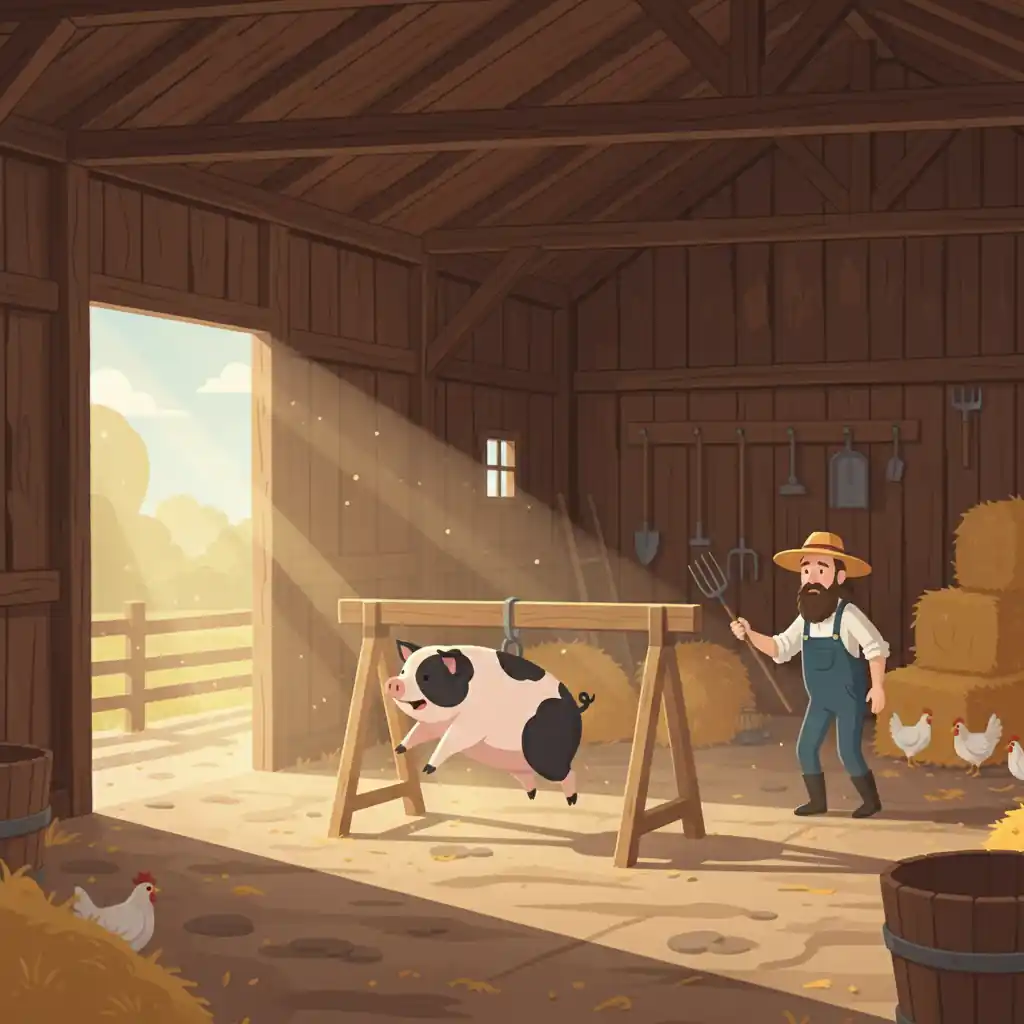
Life on the Old Farm
Life back on the old farms was tough. It was a constant dance with nature, with the soil, and with the seasons. Every day was about survival, about making the most of what you had to ensure another day, another meal. Animals were more than just creatures; they were vital assets – providing food, labor, and often, the very difference between thriving through winter and succumbing to its cruel grip.
Raising livestock, like pigs, cows, or sheep, was central to this demanding way of life. Farmers poured their energy into these animals, caring for them, feeding them, and protecting them from predators and disease. But there was always a harsh, unspoken truth hanging over the barn doors: every animal had its purpose, and eventually, its time came.
Sentimentality, while perhaps present in a farmer's heart, often took a back seat to necessity. When it was time to prepare an animal for meat, there was a specific, often grim, process involved. These weren't sterile butcher shops with hidden rooms. It happened right there, in the barn, or the yard, by the farmer's own hands. It was an unavoidable, if unpleasant, part of putting food on the family's table and ensuring the farm's continued survival.
The Barn's Special Beam
Step into a rustic barn from centuries ago. The air is thick with the scent of hay, damp earth, and the lingering presence of animals. Sunlight streams through dusty gaps in the wooden planks, illuminating motes dancing in the air. Look up, high above the stalls where the cows chewed their cud and the pigs snorted in their pens. You’d see heavy, hand-hewn wooden beams stretching across the ceiling, sturdy and strong.
One of these beams, usually the thickest and most central, had a very special, albeit somber, purpose. In certain old English dialects, particularly among rural communities, this crucial beam was sometimes referred to as a "bucket." It wasn't the kind you carry water in; rather, it was a structural support, a powerful wooden crossbar designed to bear heavy loads. It was an essential piece of farm infrastructure.
When an animal, most notably a hog, was ready for processing, it would often be hoisted up. Its hind legs would be securely tied and then suspended from this sturdy "bucket" beam. This practice, while appearing brutal to modern eyes, made the challenging and messy process of butchering far more manageable and efficient for the farmer, allowing gravity to assist in drainage and preparation.
The Unmistakable Final Kick
Once suspended in this manner, the animal's struggle was brief, yet incredibly intense. In its final, involuntary moments, driven by instinct, it would thrash and kick out with desperate force. These were not deliberate actions, but raw, powerful spasms of a body fighting against its end, a last burst of innate energy.
Its powerful legs would flail wildly, sweeping through the air, and almost invariably, striking with significant force against the very wooden beam from which it hung. The sound would be unmistakable and often jarring – a solid thud of hoof against the hard, unyielding wood, echoing in the quiet of the barn.