
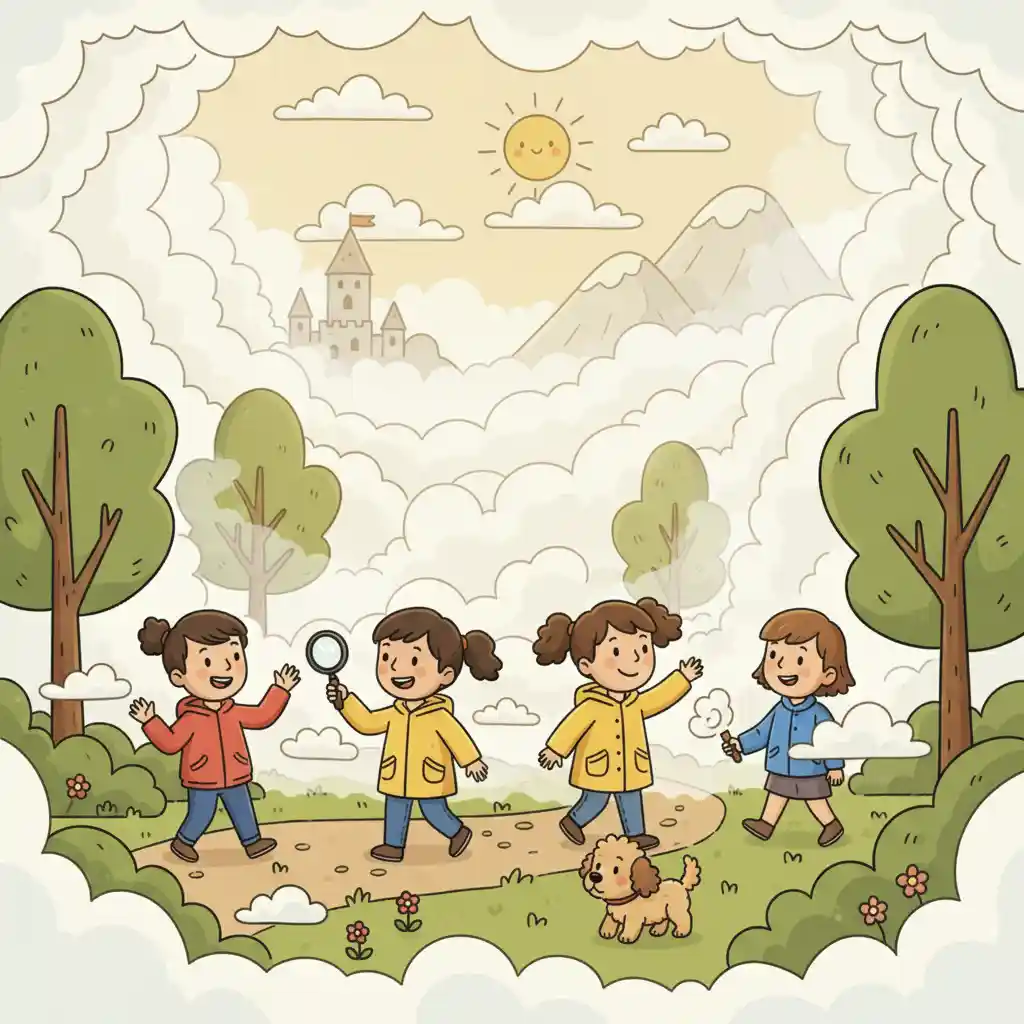
The Ground-Level Cloud
Imagine waking up and finding your entire neighborhood has disappeared into a thick, white blanket. Fog is one of nature's most mysterious magic tricks, but the science behind it is simple: fog and clouds are exactly the same thing. The only difference is their 'altitude.' While clouds float thousands of feet up, fog is a cloud that has decided to rest right on the Earth's surface.
How Fog Is Born
Fog forms when the air near the ground cools down very quickly. Just like the dew on your grass, the air reaches its 'Dew Point' and can no longer hold its invisible water vapor. The gas turns into trillions of microscopic liquid water droplets. These droplets are so light that they don't fall as rain; instead, they hang in the air, creating a thick mist that scatters light in every direction.
The Disappearing Act
Why does fog usually show up in the morning and vanish by lunch? This is thanks to the Sun. As the Sun rises, it begins to warm the ground and the air. This heat turns the liquid water droplets back into invisible gas. When the air warms up enough to 're-absorb' the moisture, the fog evaporates, and the world 'reappears' as if by magic.