
The Rusty Secret
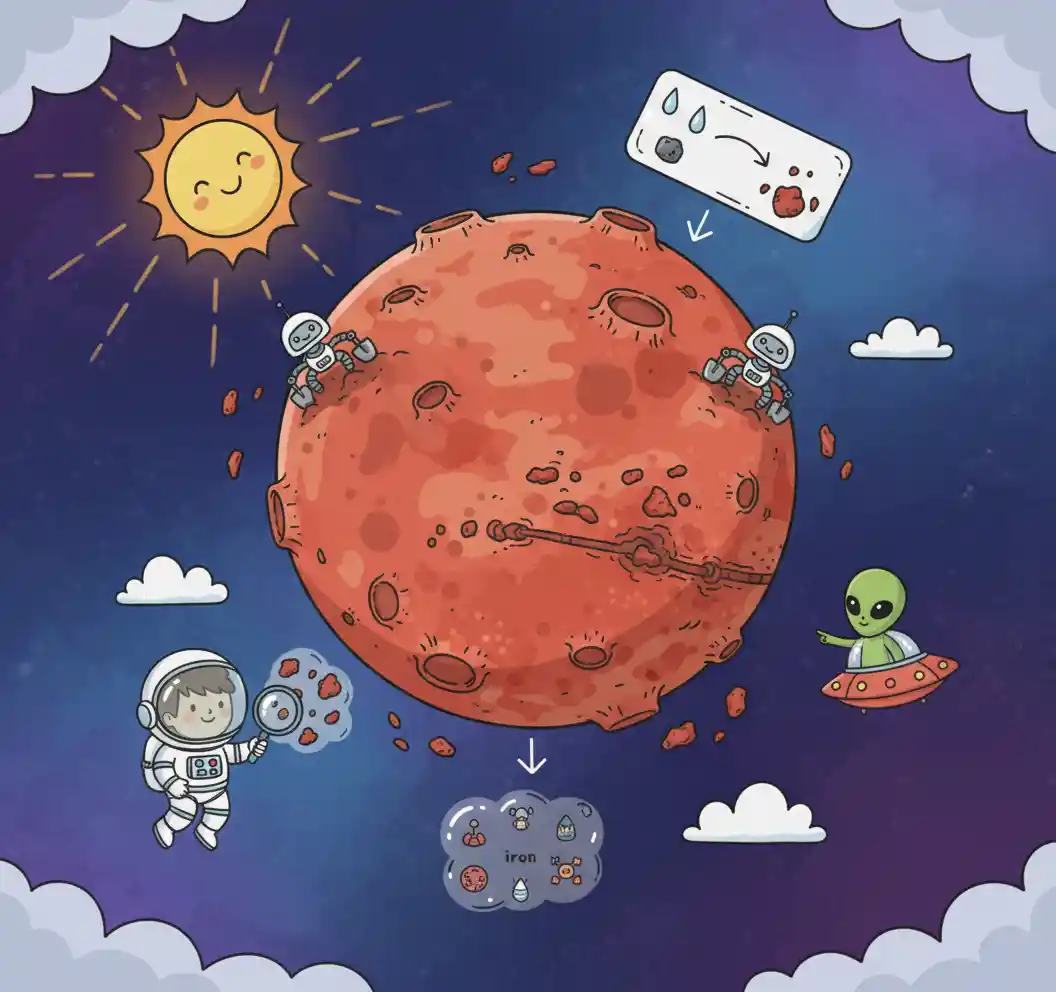
Mars has been known as the 'Red Planet' since ancient times. But if you were to dig just a few inches below the surface, you'd find that Mars isn't red all the way through. The red color is actually a thin layer of dust that covers the entire planet.
This dust is made of iron oxide. If that sounds familiar, it's because it's the exact same stuff that appears on an old rusty nail or a bicycle left out in the rain. Mars is quite literally a rusty planet!
A Recipe for Rust
To make rust, you need two main ingredients: iron and oxygen. Scientists believe that long ago, Mars was much more like Earth. It likely had flowing rivers, lakes, and a thicker atmosphere filled with oxygen.
Over millions of years, the iron in the Martian rocks soaked up that oxygen in a process called 'oxidation.' This turned the dark, volcanic rocks into the reddish-orange dust we see today.
Storms of Dust
Mars is a very windy place. Because the gravity is lower than on Earth, the tiny, lightweight particles of rust can be picked up easily by the breeze. Sometimes, these small dust devils grow into massive global dust storms.
These storms can wrap around the entire planet for months at a time, hiding the surface from our telescopes. This constant churning ensures that the rusty dust is spread everywhere, from the deepest canyons to the highest mountains.