
The Tooth Fairy's Best Friends
Imagine a world without clocks, bicycles, or even egg beaters! It would be much harder to do so many things. What's the secret behind many of these amazing machines? Tiny, toothed wheels called gears! Gears are like the superheroes of the mechanical world, working behind the scenes to make big jobs feel small. They help change how fast something moves or how strong it pushes, all with their clever teeth.
A Meshing Mystery: How Gears Talk
So, how do gears work their magic? It's all about their teeth! When two gears are placed close enough, their teeth fit perfectly into each other, like pieces of a puzzle. When one gear turns, its teeth push the teeth of the other gear, making it turn too. This is called 'meshing.' Think of it like a chain reaction – one turn leads to another! Because their teeth are always connected, gears can transfer power and motion from one part of a machine to another without slipping.
The Speed and Strength Swap
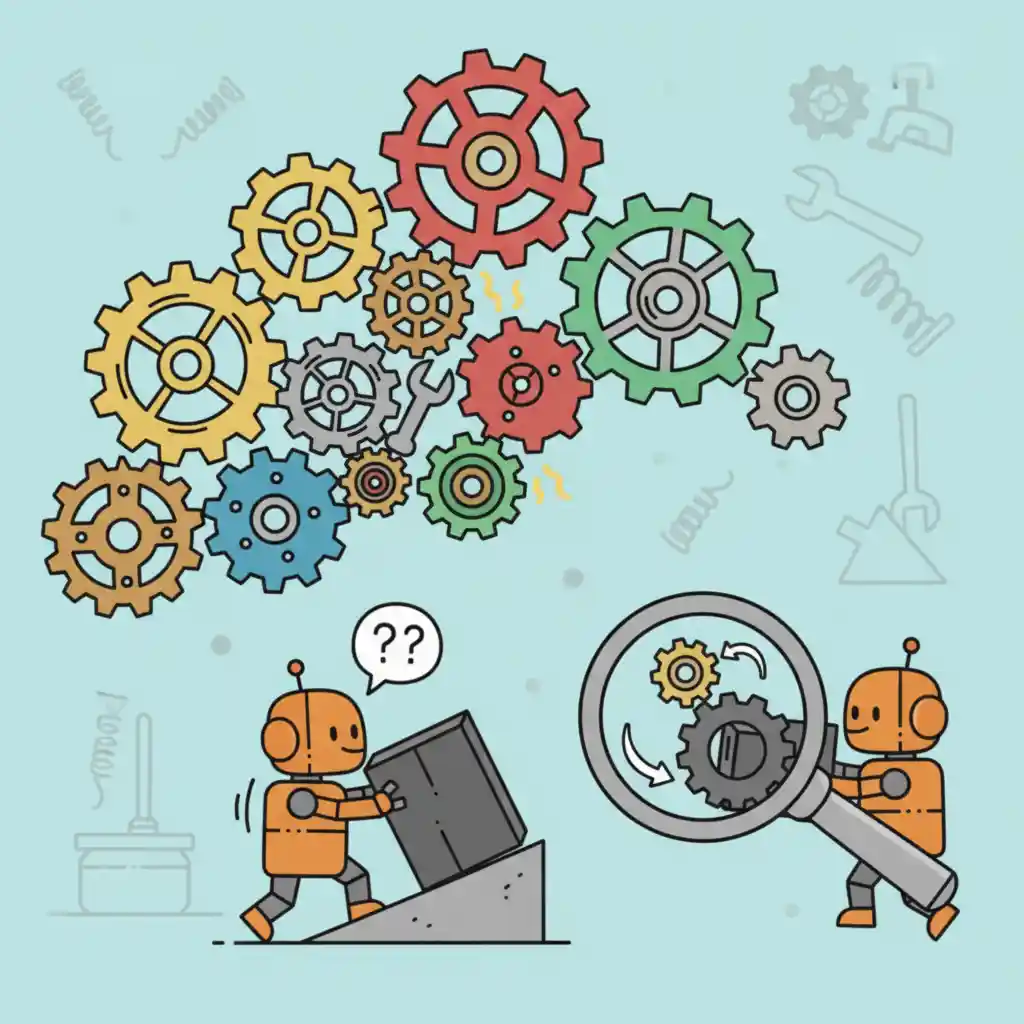
Here's where gears get really clever! Not all gears are the same size. Imagine a small gear connected to a much bigger gear. If the small gear turns once, it will only make the big gear move a little bit. This means the big gear will turn slower, but it will have much more pushing power! This is like when you use a low gear on a bicycle to go up a steep hill – you pedal more, but it's easier to push.
Now, what if the big gear pushes the small gear? The big gear turns once, and the small gear spins many times! The small gear will go super fast, but it won't have as much power. This is like a high gear on a bicycle when you want to go fast on flat ground – you don't have to pedal as much for the wheels to spin quickly. Gears help us trade speed for strength, or strength for speed, depending on what the machine needs to do!
Different Teeth for Different Jobs
Just like animals have different kinds of teeth for different foods, gears have different shapes for different jobs!
Spur Gears: These are the most common type, with straight teeth. They're great for connecting gears that are side-by-side, like in a simple toy car or a clock.
Bevel Gears: Imagine two ice cream cones pushing against each other. Bevel gears have teeth on angled surfaces, allowing them to change the direction of motion, often by 90 degrees. You'd find these in car differentials or hand drills.
Worm Gears: These look like a screw (the 'worm') meshing with a regular gear. They are fantastic for slowing things down a lot and for making sure the motion doesn't go backward. They're used in things like tuning keys on a guitar or elevators.