
The Magical Mystery of Popcorn!
Imagine a tiny, hard little seed. It looks completely ordinary, maybe a bit shiny. But put it on a hot pan, and suddenly… POP! It transforms into a fluffy, delicious, cloud-like snack! Who doesn't love popcorn? But have you ever wondered why these little kernels perform such a dazzling magic trick? It’s not actually magic, it’s amazing science, and each tiny kernel holds a secret waiting to burst out, literally!
For thousands of years, people have been enjoying popcorn. It was first discovered in Peru, and ancient civilizations even used it in decorations and ceremonies before it became the tasty treat we know today. What makes popcorn so special compared to other types of corn? It’s all about a hidden ingredient and a super-strong shell!
Inside a Tiny 'Engine'
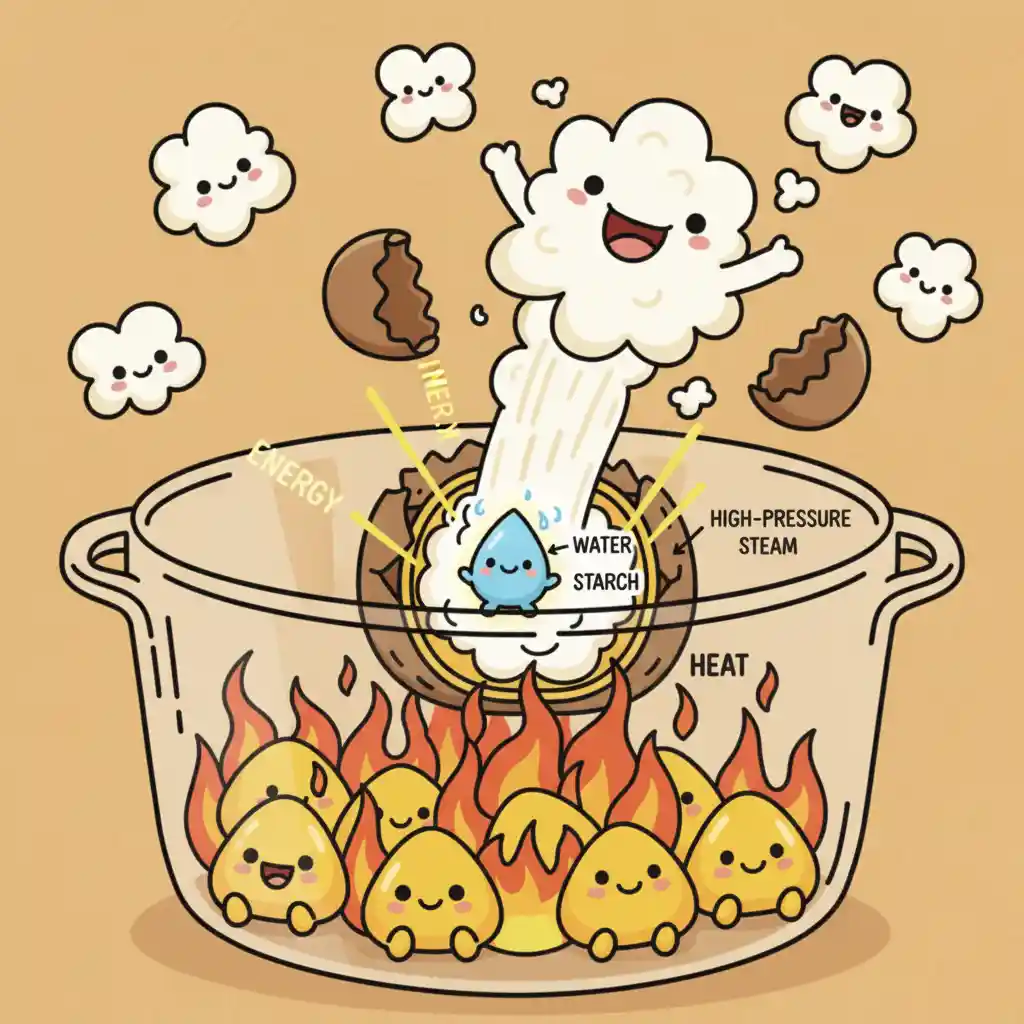
To understand the pop, we need to look inside a popcorn kernel. It's like a miniature, perfectly designed engine! On the outside, there's a super-tough, shiny, yellow shell called the 'pericarp.' Think of it like a superhero's armor, incredibly strong and waterproof. This shell is super important because it holds everything together until just the right moment.
Inside this hard shell is a soft, starchy material called the 'endosperm.' This is the part that will turn white and fluffy. But here's the real secret ingredient: right in the middle of that starchy part, there's a tiny, tiny drop of water. It’s a very specific amount, usually about 13.5% of the kernel’s weight, and it's absolutely essential for the pop!
Heating Up the Fun!
So, what happens when you put a popcorn kernel into a hot pot, microwave, or air popper? As the heat surrounds the kernel, it starts to warm up that tiny drop of water inside. We all know what happens when water gets hot enough, right? It boils and turns into steam, which is water in its gas form. This steam needs more space than liquid water.
Imagine trying to squeeze a giant, invisible balloon into a tiny box. The steam inside the kernel starts to do just that. As the temperature rises, the water quickly turns into super-hot steam, but it has nowhere to go because of that tough outer shell. It’s like a little pressure cooker kernel!