
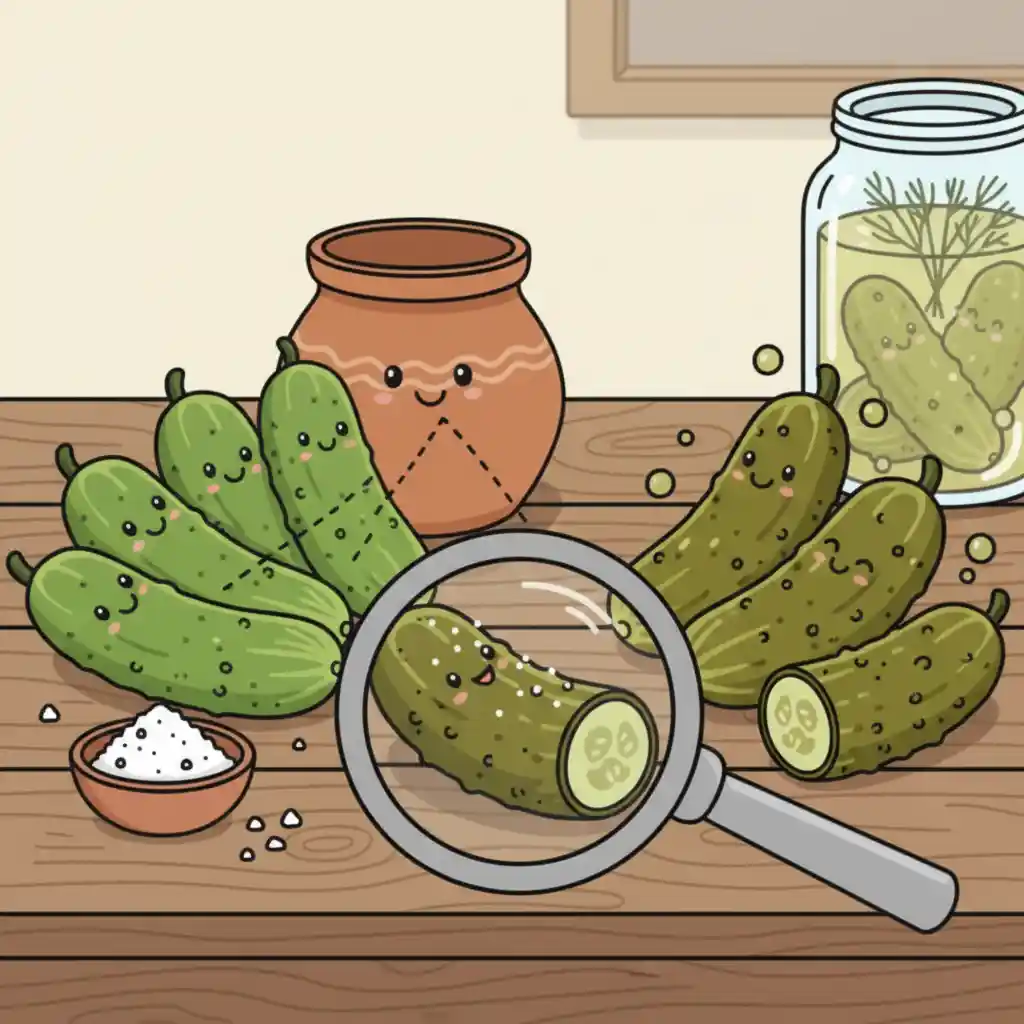
From Garden Green to Jar Scene
Imagine a bright green cucumber, fresh from the garden, cool and watery. It’s perfect for slicing into salads or eating on a warm day. But what if we told you this humble veggie could go on an amazing adventure and transform into something completely different, something tangy, crunchy, and absolutely delicious? Welcome to the wonderful world of pickles!
Pickles are like cucumbers with a secret superpower! They start their life as ordinary green gourds, but through a magical process involving salt, water, and a little bit of time, they change. It’s a bit like a caterpillar turning into a butterfly, but for vegetables! Instead of just wilting away, they become a zesty, long-lasting snack that has been enjoyed by people for thousands of years, all thanks to some clever science.
The Magic of Salt
The very first step in this incredible transformation involves one very important ingredient: salt! Think of salt as a tiny, super-thirsty sponge that loves to soak up water. When cucumbers are introduced to a salty environment, the salt begins to pull water right out of the cucumber cells. This amazing process is called 'osmosis,' where water moves from a place with less salt to a place with more salt to try and balance things out.
Why is getting water out so important? Cucumbers are actually over 95% water! By reducing some of that water and letting salt move in, the cucumber's texture changes dramatically. It becomes much firmer and develops that satisfying crunch we love in a good pickle. Plus, salt is also a fantastic guardian! It helps prevent tiny, unwanted germs and molds from growing, which would spoil the cucumber, acting as an ancient, natural way to preserve food.
The Salty Soak: Brine Time!
To kick off the pickle party, cucumbers are submerged in a special liquid bath called 'brine.' This isn't just any salty water! It's carefully crafted, often with a perfect balance of water, salt, and sometimes even a touch of sugar. But the fun doesn't stop there! Pickle makers often add a whole symphony of spices to the brine. Imagine fresh dill weed, crunchy mustard seeds, aromatic garlic cloves, spicy peppercorns, and even bay leaves – all contributing to the pickle's yummy, unique flavors.
These cucumbers then take a long, relaxing soak in this flavorful brine. Depending on the recipe and the desired pickle, this soaking period can last anywhere from a few days to several weeks! During this time, the salt continues its work of firming up the cucumbers and infusing them with flavor. It also sets the stage for the next, even more exciting, part of the pickle-making adventure: the arrival of tiny, invisible helpers!
Tiny Team Workers: Fermentation Friends!
Here's where some of the most fascinating pickle magic happens – with the help of super tiny, invisible living things called bacteria! Now, don't worry, these aren't the kind of bacteria that make you sick. These are 'good' bacteria, often called lactic acid bacteria, similar to the ones that help make delicious yogurt, sourdough bread, and cheese. They are naturally present on the cucumbers and in the air, just waiting for the right conditions to start their work.