
The Magic of Changing Colors
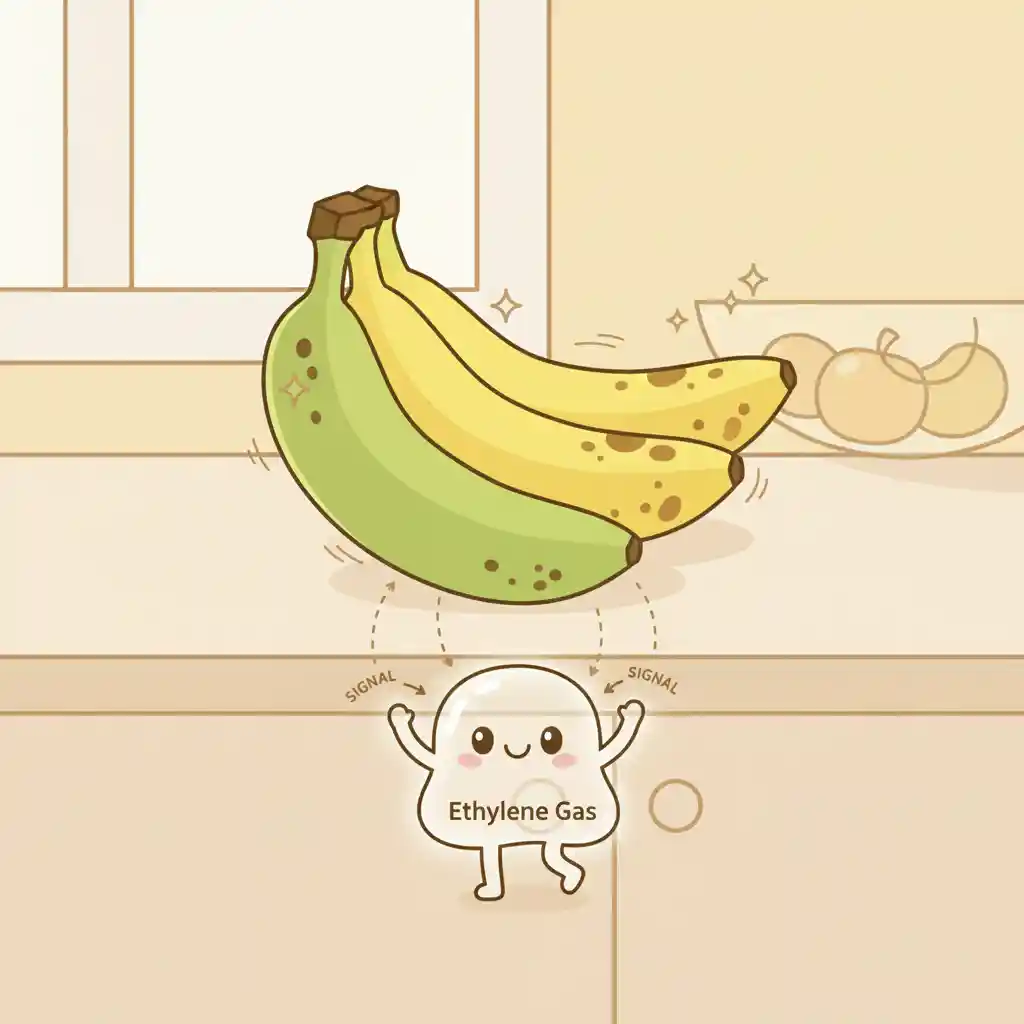
Imagine a green banana, hard as a rock and not very tasty. Now imagine a bright yellow banana, perfectly soft and sweet. What invisible magic happens to make this change? This amazing transformation is called ripening, and it's how fruits get ready to be eaten – and to spread their seeds!
When a fruit ripens, it changes color, gets softer, and becomes much sweeter. It even starts to smell more delicious! These changes are like a secret signal telling the world, "Hey, I'm ready!"
Meet Ethylene: The Fruit Whisperer
Behind this amazing change is a tiny, invisible gas called ethylene. Think of ethylene as the fruit's very own "magic potion" or a special hormone that sends messages. Just like you have hormones that help you grow, fruits have ethylene that tells them it's time to ripen.
This gas is produced naturally by the fruit itself. It’s like the fruit whispering to itself, "Okay, time to get sweet and colorful!"
From Starch to Sweetness and Softness
When a fruit is unripe, it's often full of something called starch. Starch is like tiny, complex sugar packages that aren't very sweet. Ethylene's big job is to tell the fruit's cells to start breaking down these starches into simple, delicious sugars like glucose and fructose. This is why a green banana isn't sweet, but a yellow one is!
At the same time, ethylene tells the fruit to soften. It does this by breaking down the strong walls that hold the fruit's cells together, making it juicy and easy to chew. And those color changes? Ethylene helps get rid of the green chlorophyll and lets bright new colors, like yellow or red, shine through!
Two Types of Fruit Friends: Climacteric and Non-Climacteric
Did you know not all fruits ripen in the same way? Scientists divide fruits into two main groups. First, there are "climacteric" fruits, like bananas, apples, tomatoes, avocados, and peaches. These fruits can keep ripening after they've been picked from the plant. They produce a burst of ethylene gas all by themselves, which kicks off the ripening process. That’s why you can buy green bananas and wait for them to turn yellow at home!