
The Invisible Bread Builders
Imagine you're making a delicious loaf of bread. You mix flour, water, and a little packet of something that looks like tiny sand. But inside that packet are millions and millions of super-duper tiny living things called yeast! You can't see them without a microscope, but they are about to become your bread's best friends.
Yeast are actually a type of fungus, just like mushrooms, but much, much smaller. Their amazing job is to make your bread light, fluffy, and full of wonderful air pockets. Without them, your bread would be a flat, hard, and not-so-tasty brick! They are the secret architects of every airy slice you enjoy.
A Sweet Snack for Our Tiny Friends
So, what do these invisible chefs do? Just like you get hungry, yeast gets hungry too! Their favorite food is sugar. When you mix yeast with flour and water, the yeast starts looking for sugar. Flour naturally has some sugars, and often, bakers add a little extra sugar to the dough, like a special treat for the yeast.
Once the yeast finds its sweet snack, it starts to eat! This process is called fermentation. It's how the yeast gets energy to grow and do its magical work. Think of it like a tiny energy drink for our little yeast friends, giving them the power to transform plain dough into something wonderful.
The 'Bread Breath' Mystery
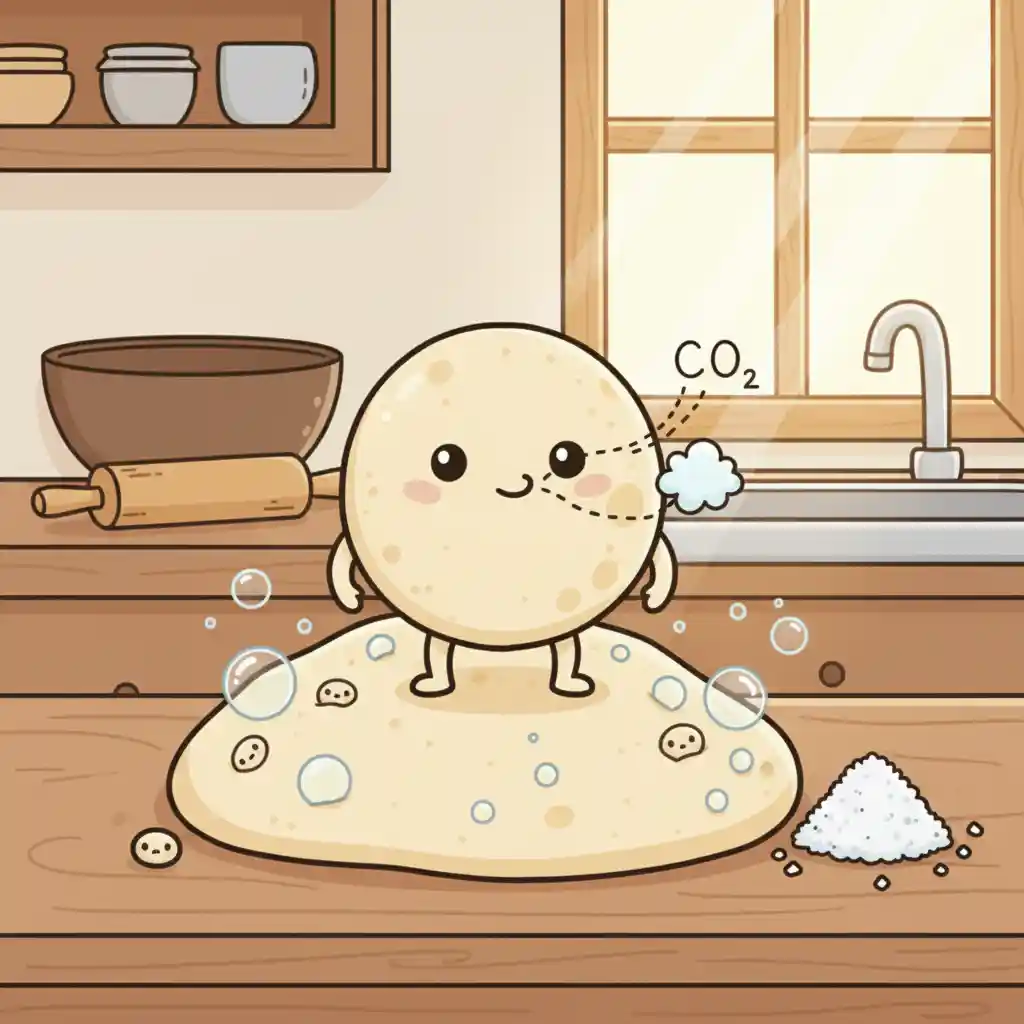
Now for the fun part! After the yeast eats the sugar, it 'breathes out,' just like you do. But instead of breathing out just plain air, yeast breathes out a gas called carbon dioxide. You know carbon dioxide as the same gas that makes soda fizzy or that you breathe out right now!
As the yeast happily munches away and breathes out more and more carbon dioxide, this gas gets trapped inside the dough. Imagine tiny, invisible balloons inflating everywhere within your dough. This is the amazing 'bread breath' at work, creating the very first bubbles.
Dough's Great Big Stretch
Why doesn't the gas just escape? Well, bread dough is super special because it's very stretchy and elastic. This stretchiness comes from a protein in flour called gluten. When you knead dough, you're actually building up and strengthening this gluten, making it like a rubber band.
As the yeast breathes out carbon dioxide, the stretchy gluten traps the gas, forming thousands of tiny bubbles. These bubbles inflate and grow bigger and bigger, making the entire dough puff up and 'rise.' This is why your dough doubles in size—it’s full of microscopic gas balloons!
The Oven's Hot Hug
What happens when your big, puffy dough goes into the hot oven? The heat gives the yeast one last big burst of energy, making it work even faster to produce more gas for a few minutes. This is called 'oven spring' and helps the bread get even bigger and fluffier just as it starts to bake.
Then, as the oven gets hotter, the heat does something else important: it stops the yeast from working (they get too hot!). The heat also cooks the dough, turning the soft, stretchy mixture into a firm, delicious loaf. All those amazing gas bubbles get locked into place, creating the soft, airy texture of your bread.
The Magical Disappearing Act
Besides carbon dioxide, yeast also produces a tiny, tiny bit of alcohol as it ferments sugar. But don't worry, your bread isn't going to make you tipsy! The high heat inside the oven causes this alcohol to evaporate completely, disappearing into the air.
What's left behind is just the wonderful flavor that yeast helps to create, along with all those lovely air pockets. So, the yeast's 'bread breath' and its other tiny secrets combine to give you that soft, bouncy, and delicious bread we all love to eat.
Beyond Bread: Yeast's Other Jobs
Yeast isn't just a superstar for making bread! These versatile little organisms are used in many other ways. They help make fluffy pizza dough, sweet cinnamon rolls, and even some types of flatbreads. Anytime you see a food that’s soft and airy, there’s a good chance yeast played a role.
Different kinds of yeast also help create different flavors. For example, sourdough bread uses special 'wild' yeast that gives it a unique tangy taste. So, whether it's a fluffy dinner roll or a crispy pizza crust, you can thank those amazing, invisible yeast for their hard work!