
The Platelet Plug
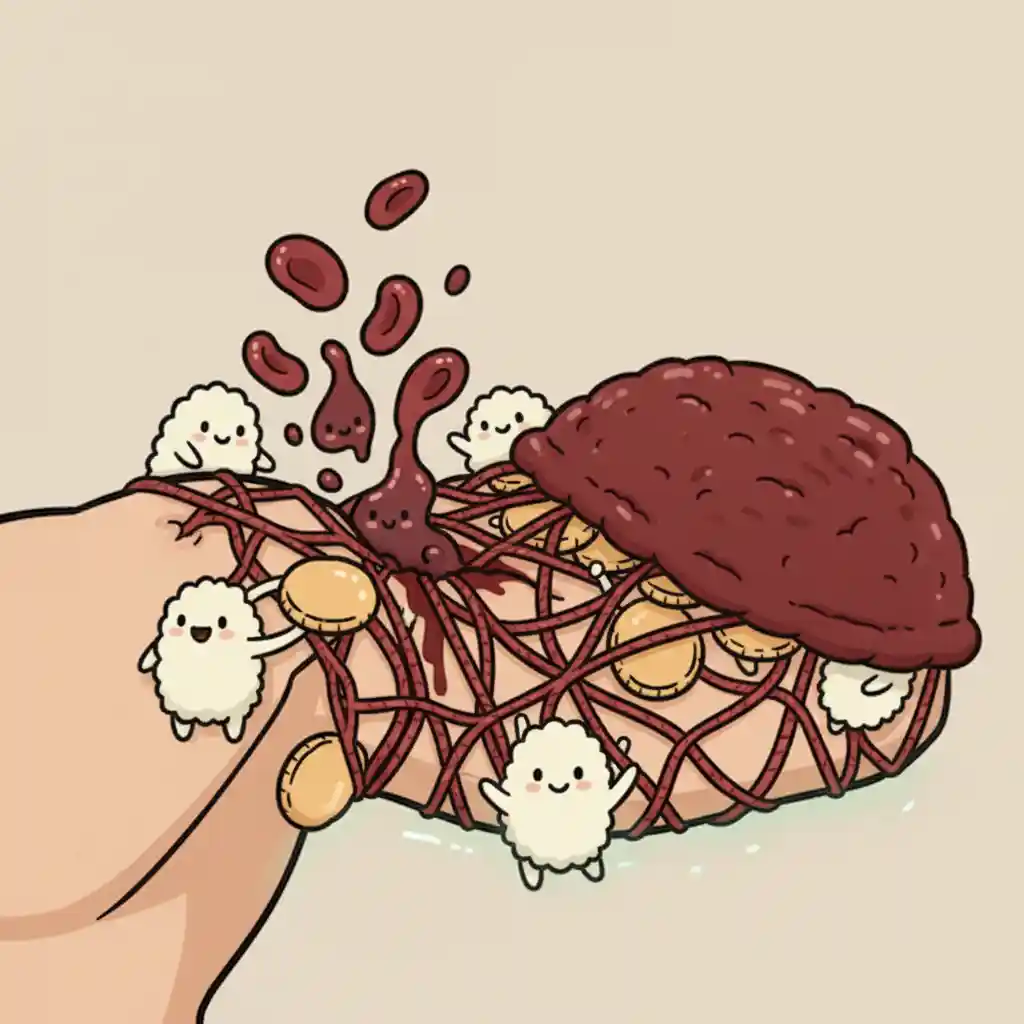
The moment you get a cut, your blood vessels spring into action. Tiny, plate-shaped cells called Platelets rush to the opening. They change their shape to become 'sticky' and clump together.
This forms a temporary plug that stops you from losing too much blood, acting like an emergency cork in a leaky bottle.
The Fibrin Net
To make the plug strong, your body releases a protein called Fibrin. Think of fibrin as long, sticky threads that weave a net over the platelets. This net traps red blood cells and more platelets to create a sturdy clot.
As this wet clot is exposed to the air, it begins to dry out and harden, transforming into the protective crust we call a scab.
The Protective Shield
A scab is more than just dried blood; it is a fortress. Its main job is to keep 'bad guy' bacteria and dirt from entering your body while the skin underneath is broken.
It provides a safe, humid environment for the healing process to happen without being disturbed by the outside world.
The Clean-Up Crew
Underneath the scab, your White Blood Cells are working overtime. They act like a specialized clean-up crew, eating up any germs or dead tissue that might have gotten into the wound.