
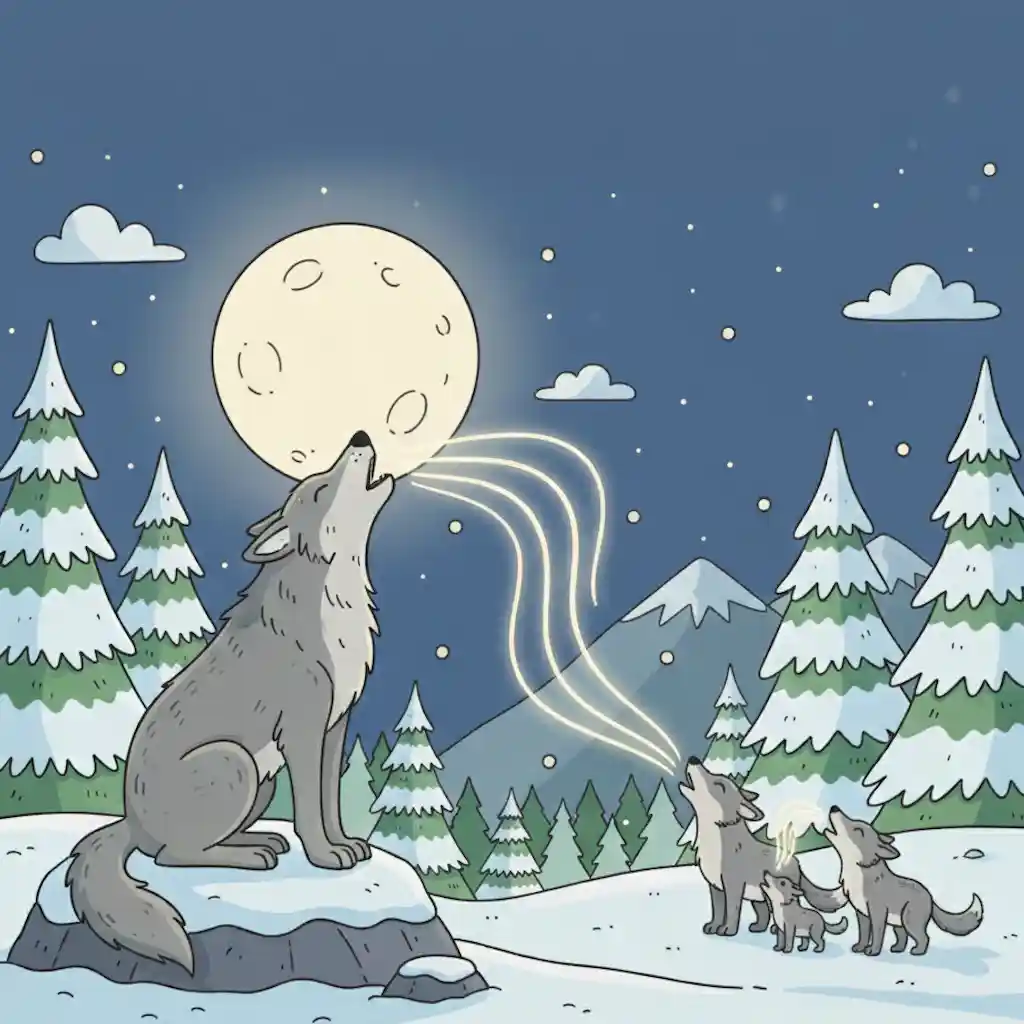
The Long-Distance Check-In
In the dense forests and vast tundras, keeping a family together is a difficult riddle. Wolves solve this with the howl. It isn't just a random noise; it’s a sophisticated social tool.
When a wolf is separated from its pack, it lets out a long, mournful cry. This is a request for a 'location ping.' The rest of the family answers, allowing the lost wolf to navigate home using only its ears.
The Acoustic Fingerprint
Every wolf has a unique voice. Just like you can recognize a friend’s voice over the phone, wolves can tell exactly who is howling based on the pitch and rhythm.
This allows the pack to know if the caller is a trusted elder, a playful pup, or a stranger from a rival group. It is a biological 'caller ID' that works even in total darkness.
Building a Sound Wall
Wolves are very protective of their territory. Instead of fighting, they often use 'chorus howling' to defend their borders. When the whole pack howls together, they create a wall of sound.
By howling at slightly different times and pitches, a small pack can trick listeners into thinking they are much larger and more dangerous than they actually are. It is a psychological defense system.
The Physics of the Howl
Why do wolves howl instead of bark? It’s a matter of physics. High-pitched barks get scattered by trees and hills very quickly. Low-frequency howls, however, can travel vast distances.