
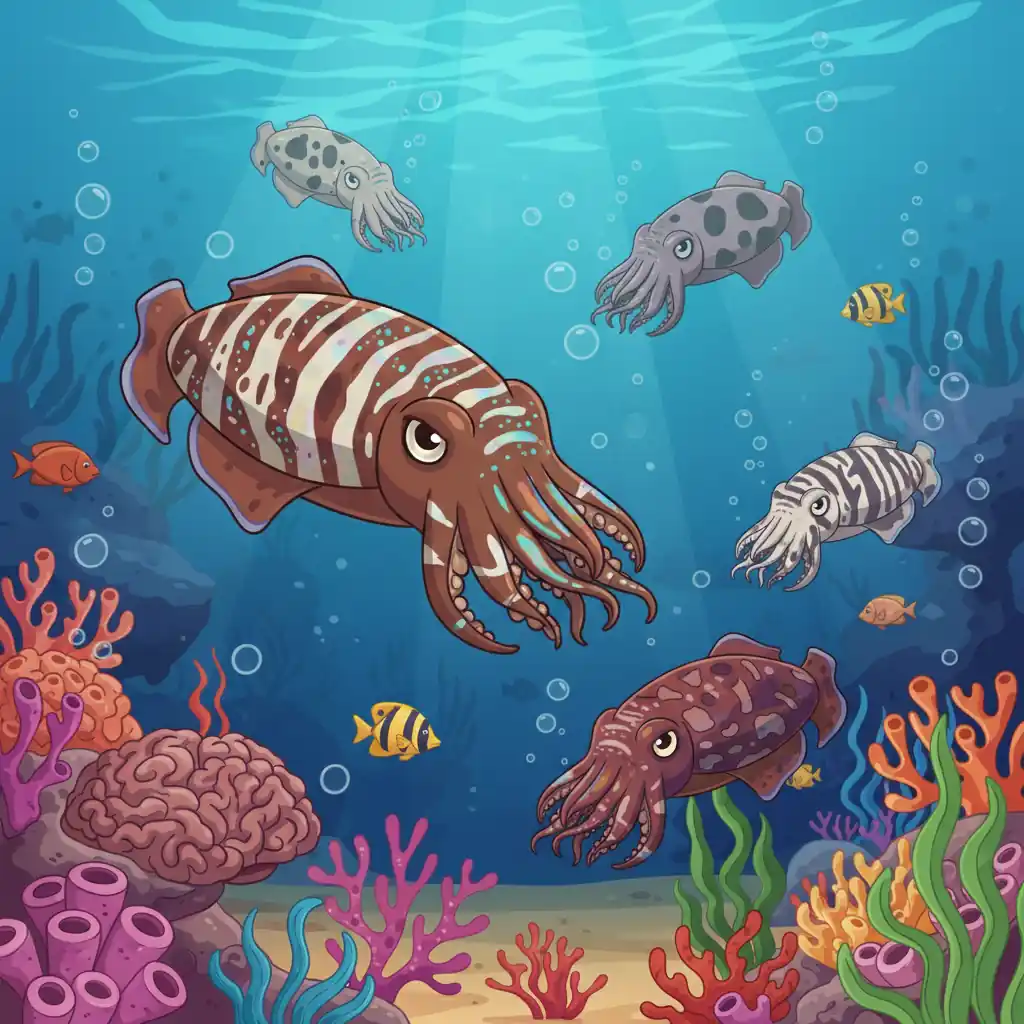
Meet the Cuttlefish, Ocean's Master of Disguise!
Imagine an animal that can disappear in the blink of an eye, melting into the sand, transforming into a rocky lump, or even impersonating a waving piece of seaweed. Sounds like magic, right? Well, meet the cuttlefish, one of the ocean's most incredible and mysterious creatures! Despite their name, they're not actually fish at all. They belong to a super-smart group of ocean animals called cephalopods, which also includes octopuses and squids.
Cuttlefish are found in shallow, warm waters all around the world, and they have an amazing trick up their sleeves (or rather, in their skin!). They are masters of disguise, able to change not just the color, but also the pattern and even the texture of their skin in less than a second. This superpower helps them survive, hunt, and even 'talk' to each other without making a sound. Get ready to dive deep into their colorful, intelligent world!
The Magic Pixels: What Are Chromatophores?
So, how do cuttlefish perform their vanishing acts? The secret lies in tiny, colorful sacs called chromatophores. Think of them like thousands of miniature balloons filled with different colored paints—red, yellow, brown, and black. These 'paint balloons' are hidden just under their skin, and each one has its own set of tiny muscles attached to it.
When a cuttlefish wants to change its color, its brain sends signals to these muscles. If the muscles pull tight, the balloon-like sac stretches out, showing off its vibrant color. If the muscles relax, the sac shrinks, hiding the color. Because they have so many of these chromatophores and can control them individually and incredibly fast, cuttlefish can create complex patterns, stripes, spots, and waves that appear and disappear like ocean magic!
Beyond Colors: Lights, Shimmers, and Textures
But cuttlefish skin isn't just about chromatophores. They have two other amazing types of cells that work together with the color sacs to create their ultimate camouflage. First are 'leucophores,' which are like tiny, reflective mirrors. They reflect all the white light around them, helping the cuttlefish perfectly match the brightness of their surroundings.
Then there are 'iridophores,' which are cells that create metallic, shimmering colors—like the iridescence you see on a soap bubble or an oil slick. These cells bend light in special ways to create flashes of blue, green, and silver. And as if that weren't enough, cuttlefish also have muscles called 'papillae' that can instantly change the texture of their skin, making it bumpy like a rock, spiky like coral, or smooth like sand. Imagine being able to change your clothes and grow a bumpy sweater, all in one second!
Why So Flashy? The Cuttlefish's Reasons to Change
With such incredible skin, cuttlefish use their color-changing powers for many important reasons. The most famous is camouflage. By matching their background perfectly, they can hide from hungry predators like sharks and dolphins. One moment they're there, the next, they've vanished into the seabed, becoming virtually invisible.