
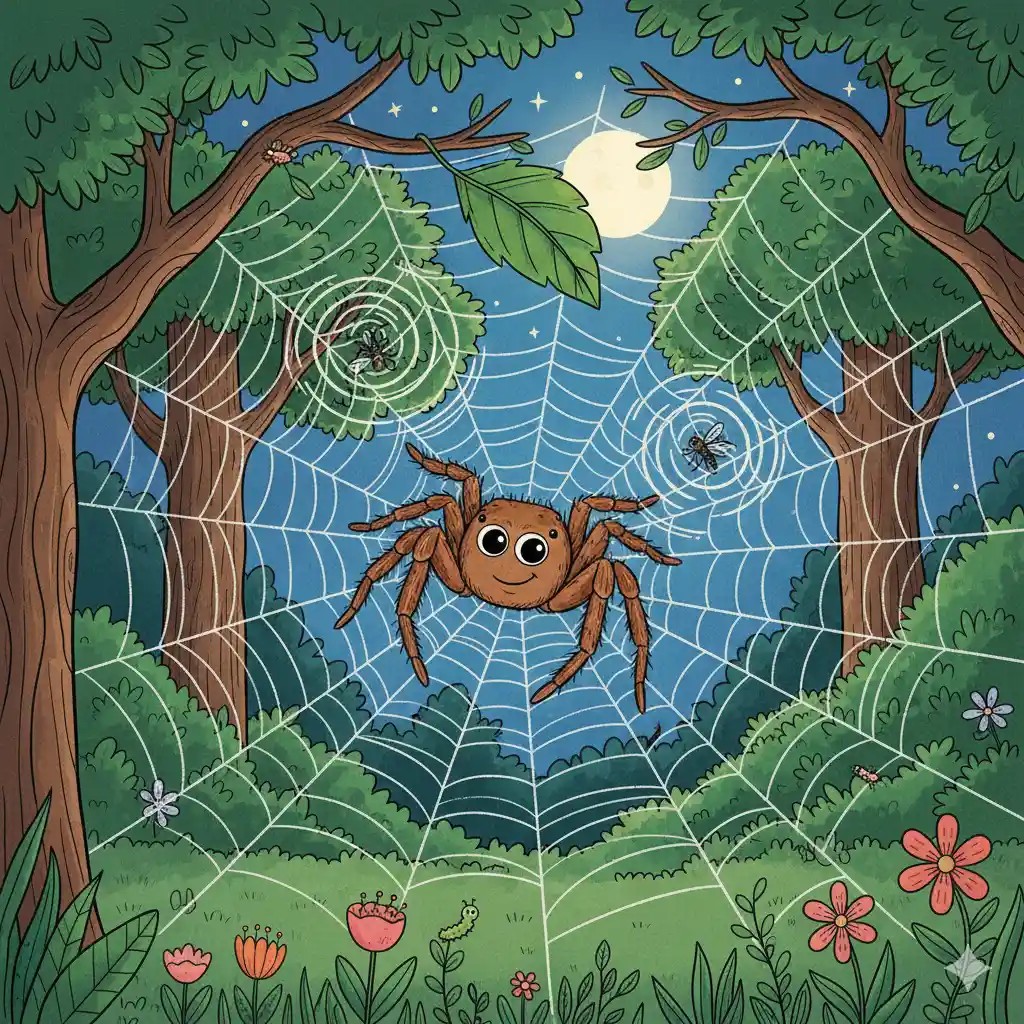
The Giant Ear
For an orb-weaver spider, the web isn't just a trap—it's a massive, external sensory organ. Spiders often have poor eyesight, so they solve the riddle of 'what's for dinner?' through physics.
The silk threads are highly conductive of vibrations. When anything touches the web, the entire structure shivers. The spider, sitting in the center, feels these pulses like a telephone ringing.
Trichobothria: The Feet Sensors
To catch these tiny movements, spiders have specialized hairs on their legs called trichobothria. These are among the most sensitive organs in the animal kingdom, capable of detecting the movement of a single air molecule.
When the web vibrates, these hairs bend. This tells the spider's brain exactly which strand is moving and how fast the vibration is traveling.
The Rhythm of Life
Spiders are masters of signal processing. They can distinguish between a struggling bee (fast, erratic vibrations) and a harmless leaf (slow, rhythmic swaying from the wind).
This prevents the spider from wasting energy running out for 'false alarms.' They only commit to a chase when the web 'sings' the specific song of a trapped meal.
The Love Song
For a male spider, approaching a female is the most dangerous riddle of his life. If he just walks onto the web, he'll be eaten like a fly. To survive, he must 'pluck' the web like a guitar.