
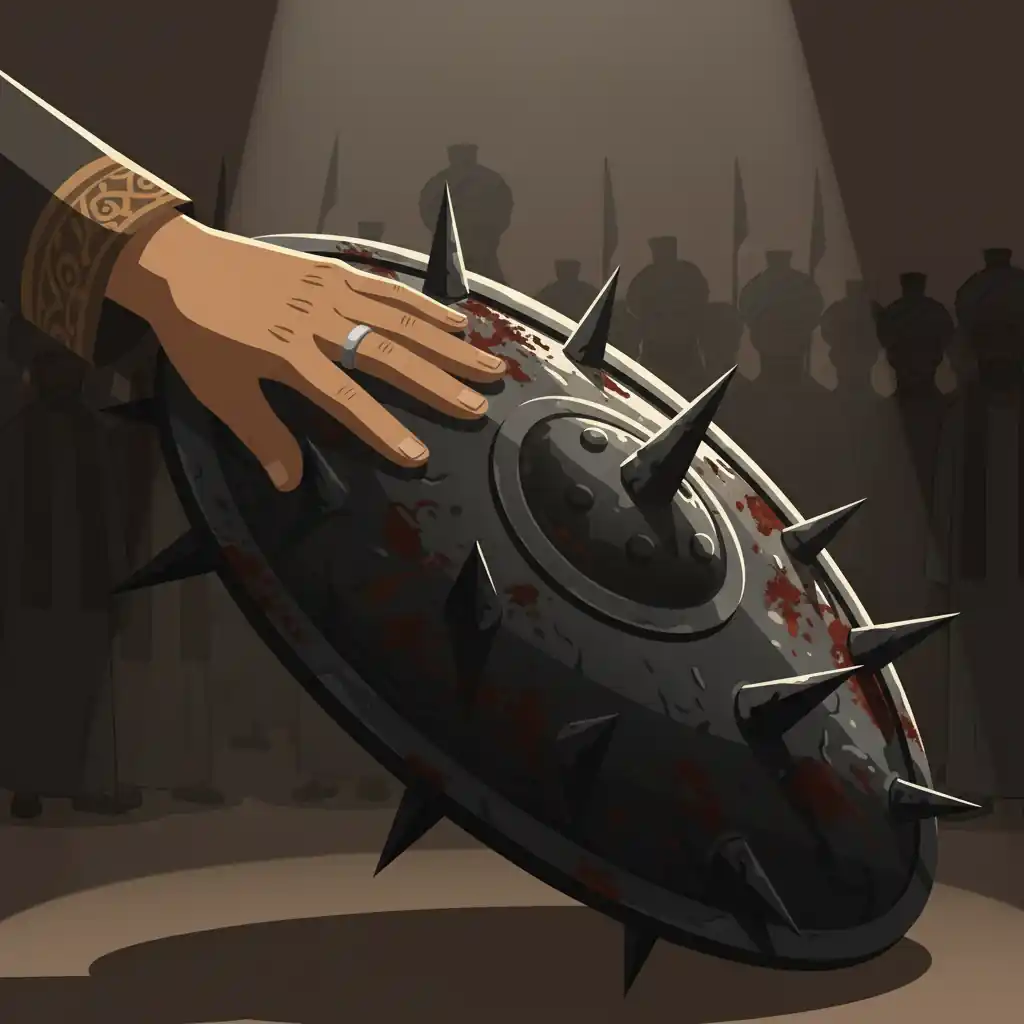
The Shield's True Face
In ancient Arabia, a shield was more than just a piece of defense. It was a tool of war, yes, but also a symbol. A public declaration.
Every warrior carried one. These shields were often crafted with two distinct sides. The front was usually smooth, polished, sometimes adorned with intricate patterns or family colors. It faced outward during friendly encounters or peace councils. It spoke of honor, alliance, and respect.
But the back? That was a different story. The back of the shield, known as 'ظهر المجن' (dahr al-majann), was often rough. Sometimes it held the grip straps. Other times, it was left unfinished, dark, or even spiked. This side was meant to face enemies, to absorb blows without concern for beauty.
Presenting the front of your shield was a sign of welcome, a non-aggressive stance. Showing the back? That was something else entirely. It carried a heavy meaning, a message carved not in words, but in defiance.
The Broken Alliance
Our story begins with two tribal leaders, Khalid and Omar. Their tribes shared vast stretches of desert, and their friendship was legendary. They had fought battles side-by-side, shared feasts, and sworn loyalty to each other under the desert stars. They were like brothers.
Their bond was strong. Until water became an issue.
A new, abundant well was discovered, sitting on a strip of land disputed by a smaller, neutral tribe. Both Khalid's and Omar's people desperately needed access to it, especially during a harsh dry spell.
Khalid, known for his cunning, began secret negotiations with the leaders of the smaller tribe. He offered them protection and resources, promising his tribe's support if they granted him sole access to the well.
Omar heard rumors. Then he learned the truth. Khalid had not only gone behind his back but had secured a deal that would leave Omar’s tribe struggling. It was a deep wound, a betrayal that cut through years of shared history. Omar felt a cold rage settle in his heart. His brother had become his rival.
The tension grew with each passing day. The very air between their camps felt heavy. Finally, a council of elders was called to settle the dispute. Everyone hoped for reconciliation.
The Public Declaration
The day of the council arrived. Representatives from many tribes gathered, their faces grim. Khalid and Omar sat opposite each other, their usual warm glances replaced by stony stares.
The discussion began, heated and fraught. Omar spoke of betrayal. Khalid defended his actions as necessary for his people. Words flew like arrows, but neither side would yield.
Then, Khalid did something unexpected. He stood up, his hand moving to his shield. The heavy, round piece of leather and metal rested against his side. All eyes fixed on him.