
The Unseen Chains of Honor
In ancient Arabia, a person's honor was everything. More than land, more than gold, a good name was the most prized possession. For women of noble birth, this was particularly true.
Their conduct, their reputation, was not just their own. It was a mirror reflecting the honor of their fathers, brothers, and husbands. A noble woman’s dignity was a sacred trust, passed down through generations.
Among the many unwritten laws, one specific act carried a heavy social stigma for women of high status: wet-nursing for money. It was known as رضاعة بأجر, or 'nursing for a fee'.
This wasn't about the act of nursing itself, which was revered. It was about the exchange of money. For a 'Hurrah' – a free, noble woman – to offer her breast for pay was seen as a profound lowering of status, a desperate act usually reserved for enslaved women or those utterly devoid of options.
It implied she had nothing else to offer. No other skill, no other way to feed her family. It meant 'selling' the most intimate, life-giving part of herself, reducing her to a mere vessel for sustenance, rather than a guardian of family prestige. This perceived loss of Hurriyah – her nobility and freedom from such degrading necessity – was a fate many would rather die than accept.
The Thirst of the Sands
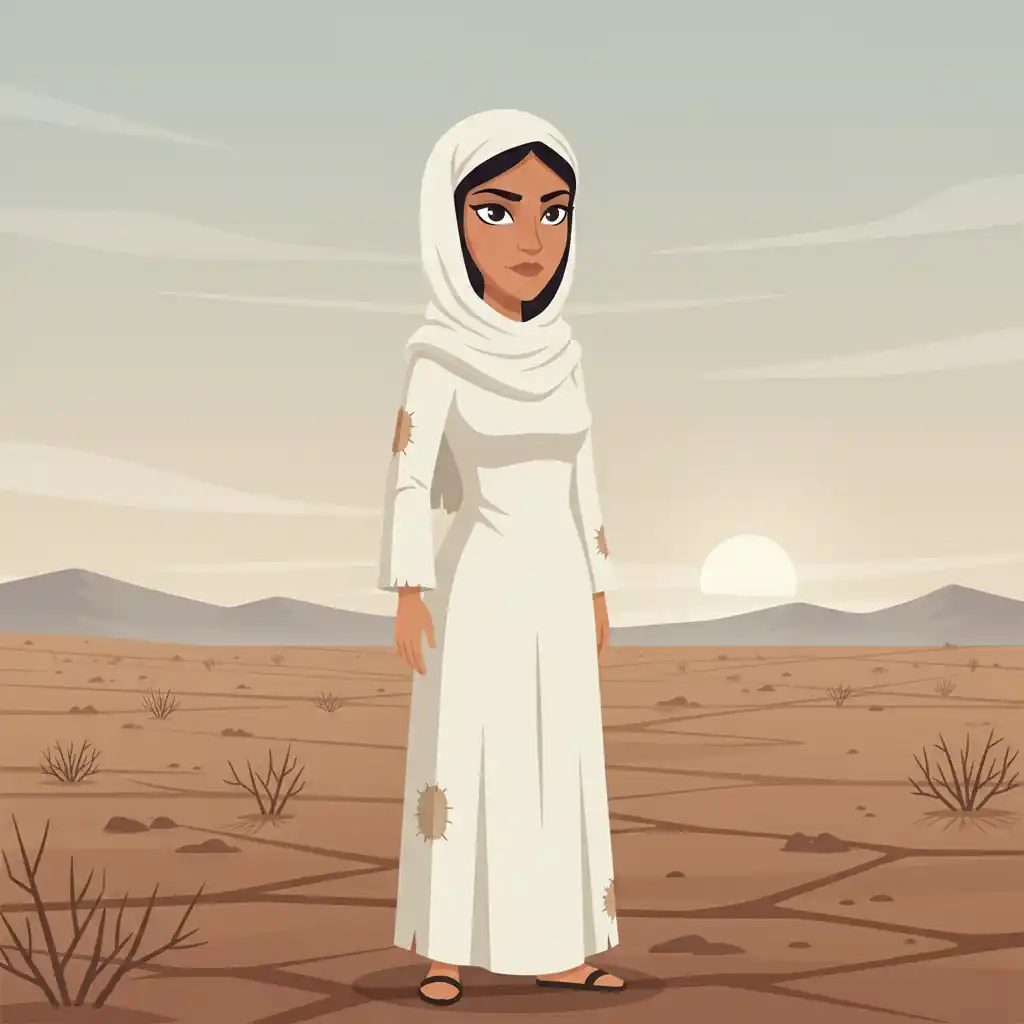
Centuries ago, in a desert land, lived a woman named Layla. She belonged to a proud tribe, her family's lineage stretching back through respected elders and fierce warriors. Her life, though simple, was rich in the quiet dignity of her people.
Then came the drought. It was a cruel, relentless season. The life-giving rains did not fall. The wadis ran dry. The sparse crops withered under the scorching sun.
Layla watched as her family's meager stores vanished. The date palms, usually heavy with fruit, stood gaunt and barren. Their small flock of goats and camels grew weak, then started to die.
Poverty, slow and agonizing, crept into their tent. Her husband, a man of strong hands and a proud heart, scoured the land daily, returning with nothing but dust and despair. The prestige of their name offered no food, no water.
Layla’s children grew thin. Their laughter faded, replaced by the quiet whimper of hunger. Every sunrise brought a fresh wave of desperation. The joy had drained from their lives, leaving only the dull ache of survival.
The Heavy Bargain
One sweltering afternoon, a stranger arrived. He was a messenger from a distant, unaffected city, sent by a wealthy merchant. The merchant’s wife had given birth, but could not nurse her child. They desperately needed a wet nurse.
The offer was beyond generous. Not just food for Layla's family, but a bounty of gold, new livestock, and a promise of secure lodging. It was a lifeline, a gleaming oasis in their parched existence.
Layla’s family rallied around her. Her elderly mother, her gaunt husband, her anxious sisters – all urged her to accept. 'It is salvation!' her brother exclaimed, his voice cracking with hope. 'It is for the children!'