
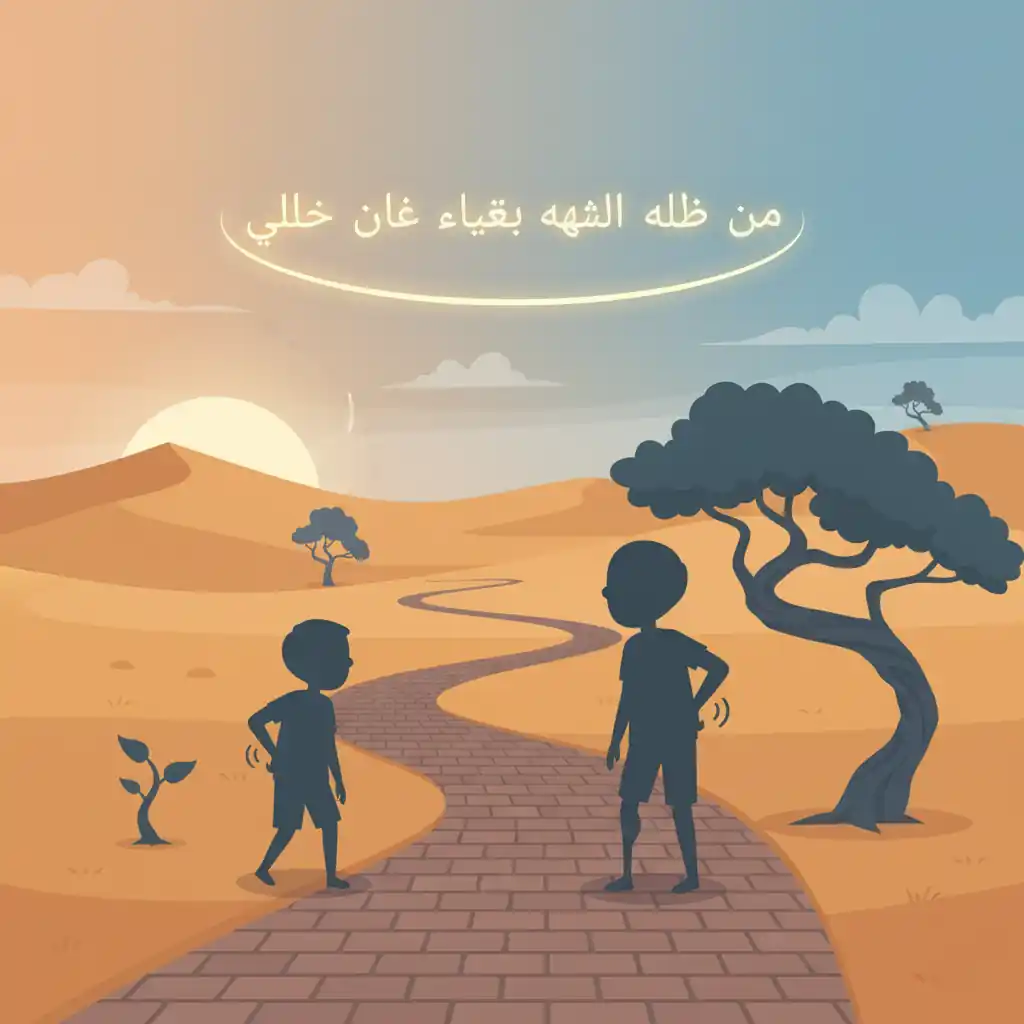
The Crooked Sapling
Old Hakim loved his garden. It stretched behind his sun-baked village home, a place of peace and green life. He knew every plant, every fruit tree, every patch of herbs by heart.
One year, he planted a new olive sapling. It was young, vibrant, full of promise. But from the beginning, it grew at an awkward angle. Not straight up, but with a slight, persistent bend in its delicate trunk.
Hakim saw it. “A bit bent,” he thought, stroking his beard. “But it’s young. It will correct itself. Or I’ll tie a stake to it later. When it’s stronger, less fragile.” He had other tasks, more urgent ones. The new well needed lining. A stubborn fig tree demanded attention.
He kept watching the little olive tree. It grew. Slowly, steadily. That slight bend became more pronounced. A definite curve in its trunk, rather than a straight, upward line.
He still told himself, “Later. When it’s an actual tree. Then I’ll put a brace on it. A good, strong one.” He imagined a straight, proud trunk. A pillar of his orchard. The thought brought him comfort.
The Unbending Giant
Years passed. Decades. Hakim’s hair turned white, much like the blossoms of his almond trees. His own back, too, had developed a permanent curve from years of tending his land.
The olive sapling was now a towering tree. Its roots gripped the earth like an old man’s knuckles. Its branches spread wide, heavy with glistening fruit. It gave good shade, good oil.
But its trunk. That original, slight bend from its youth? It was now a thick, unyielding curve. A solid, woody arc. It was part of the tree’s very being.
Hakim stood beneath it one warm afternoon. He traced the bend with his gnarled fingers. He remembered his youthful promise to himself: “I’ll fix it later.”
He considered trying. Getting ropes. Winches. Pulling it straight. But the tree was too strong, too old. Its very core had formed around that bend. Any attempt to straighten it now would break it, not correct it. It was simply impossible.
The tree was magnificent, fruitful, a testament to endurance. But it was forever marked by that early, uncorrected flaw.
The Human Reflection
Hakim often sat under that crooked olive tree, watching the village children play in the dusty square. He saw reflections of his tree’s story in them.
There was little Tariq. Always sharing his sweets, his simple wooden toys. Even if he only had a little, he’d offer half. As a man, Tariq was known for his generosity, for helping neighbors without being asked. His hand was always open.
And then there was Sami. As a boy, Sami would hide his favorite dates, denying he had any when his friends asked. He’d sneak extra helpings at communal feasts. Old Sami, the villagers said, counted every penny, shared nothing. His hands, like his heart, stayed clenched.
Hakim saw how a child’s small habits, like a tiny bend in a sapling, became the unyielding truths of an elder. They hardened over time, becoming fixed.