
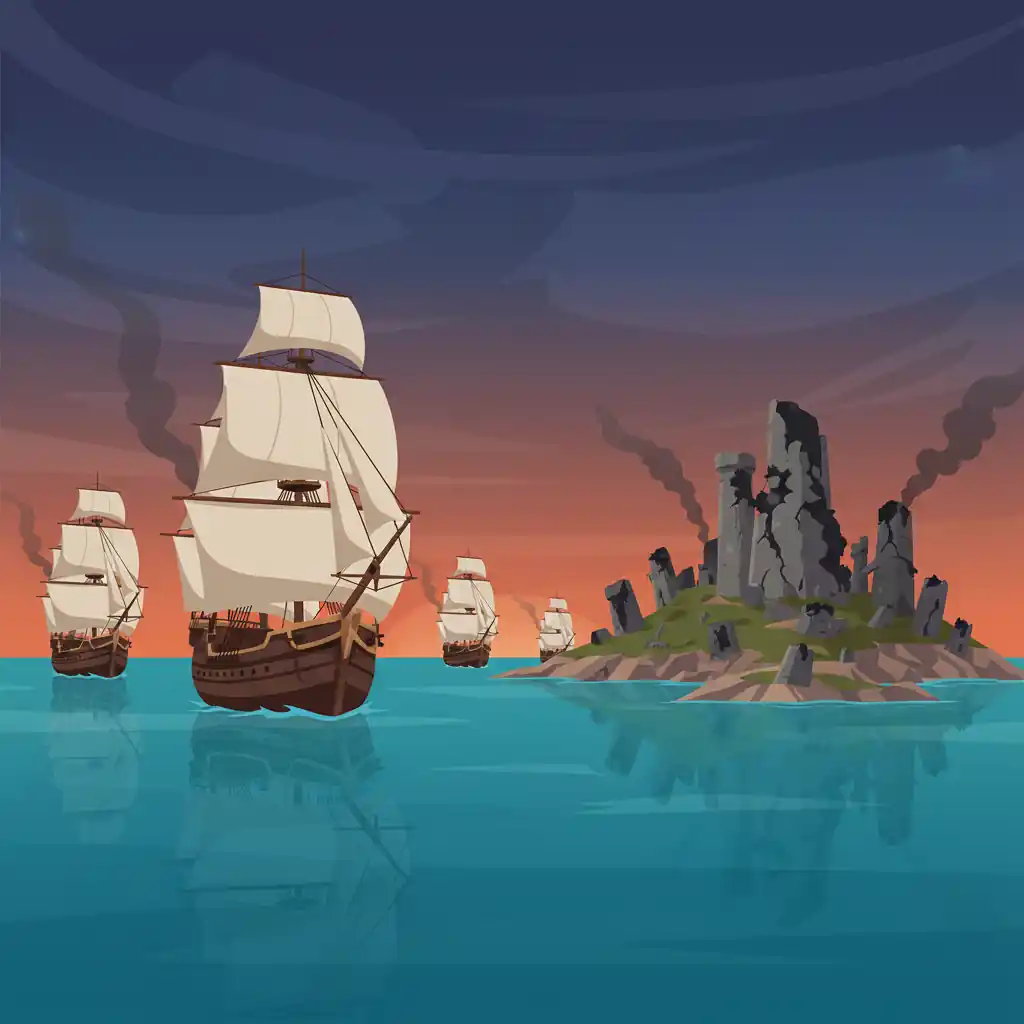
The Island Under Siege
The year was 1565. The island of Malta, a small rock in the vast Mediterranean, faced an impossible enemy. An Ottoman fleet, massive and relentless, appeared on the horizon.
Thousands of soldiers disembarked. Cannons roared. Stone walls crumbled under endless bombardment.
Inside the forts, the Knights of St. John, along with the Maltese people, fought with desperate courage. They were outnumbered. They were exhausted. But they refused to surrender.
Days bled into weeks. The sun beat down, turning the island into a furnace. Water supplies dwindled. Food ran short.
Messengers, brave and swift, risked everything. They slipped past enemy lines in small boats, carrying frantic pleas for help. They sailed to Sicily, to Spain, to the Papal States. Everywhere they went, they begged for aid.
“Malta will fall,” they warned, “unless help arrives soon. Very soon.”
The Ottoman assault showed no sign of stopping. Every day brought new attacks, more casualties, deeper despair. The defenders looked eastward, hoping for sails, any sails, but the sea remained empty.
Arguments and Delays
In the palaces of Europe, the pleas from Malta were heard. Kings and queens sat on their thrones. Advisers whispered in their ears.
Should they send help? Of course. But when? And how much? And who would pay?
The King of Spain, Philip II, weighed his options. His treasury was not endless. His generals debated logistics. Was it worth the cost? Was Malta truly vital?
Weeks passed. Precious weeks. While Malta burned, politicians argued over contracts. While defenders bled, admirals worried about wind patterns.
They discussed fleet sizes. They haggled over provisions. They debated the exact date of departure. Every decision became a mountain of paperwork.
Each kingdom had its own interests, its own anxieties. The urgency of Malta’s plight seemed to fade amidst the endless deliberations.
The Ottoman forces tightened their grip on the island. The desperate messages from Malta became more chilling. The tone shifted from pleas to a final, grim defiance.
Still, the European powers took their time. They were preparing a grand relief expedition, a show of force. They wanted it to be perfect. They wanted it to be overwhelming.
They just didn't want it to be now.
The Grand Arrival
Finally, after what felt like an eternity, the relief fleet set sail. It was magnificent. Dozens of ships, sails billowing, banners flying. Trumpets blared from the lead vessels.