
How to Increase Your Child's Vocabulary: The Stealth Learning Method for Parents
Skip the flashcards! 5 storytelling tricks that grow your child's vocabulary naturally, plus custom stories that teach the words you choose.
By Lee, Papyrly team · · 2 min read

When parents want to improve a child's vocabulary, the natural instinct is to pull out flashcards, sight-word lists or workbooks.
The problem? Isolated word lists and sentences lack emotional context, so they feel unrelatable to young learners. Memorizing definitions without a hook rarely sticks. Children grow their vocabulary by linking words to a scene or an action. For example, if you use the word indolent to describe a character who is extremely lazy, your child is far more likely to pick it up as part of their active vocabulary.
The key is to bring rich, advanced language into your child's daily routine without it feeling like a chore. This approach is called stealth vocabulary building, and one of the most natural ways to do it is through stories. You probably heard it from your own language teachers growing up: the best way to improve your vocabulary is to read.
5 Storytelling Tricks to Grow Vocabulary Fast
Trick 1: Show, Then Name
Describe what happens first, then label it with the target word.
- Instead of: "Peter was very clever."
- Try: "Peter spotted the trap, picked the lock and slipped quietly past the guard. He was remarkably ingenious."
Trick 2: Character-Trait Anchors
Tie target words to a character's personality, so the meaning stays attached to their name:
- Captain Audacious, the fearless knight.
- Gideon the Meticulous, an owl who organizes his bookshelf by feather shade.
- Barnaby the Voracious, a pig who eats everything in sight.
Trick 3: Contrast Pairings
Put a familiar word right next to a new synonym to bridge the gap:
"The cave was dark, so pitch-black and murky that Bingo couldn't even see his own paws."
Trick 4: Echo Loops
Repeat the new word in different situations:
- Page 2: "This puzzle is baffling!" muttered the wizard.
- Page 5: "Why is the door locked? How baffling!" whispered the mouse.
- Page 8: "Wasn't that a baffling maze tonight?"
Trick 5: Create Custom, Vocabulary-Rich Stories with Papyrly
Finding books that match your child's reading level and interests can be tricky. Children's books also tend to stick to simple words for their age group, so advanced words are hard to find. With Papyrly, you can create custom stories that weave vocabulary words into topics your child already loves.
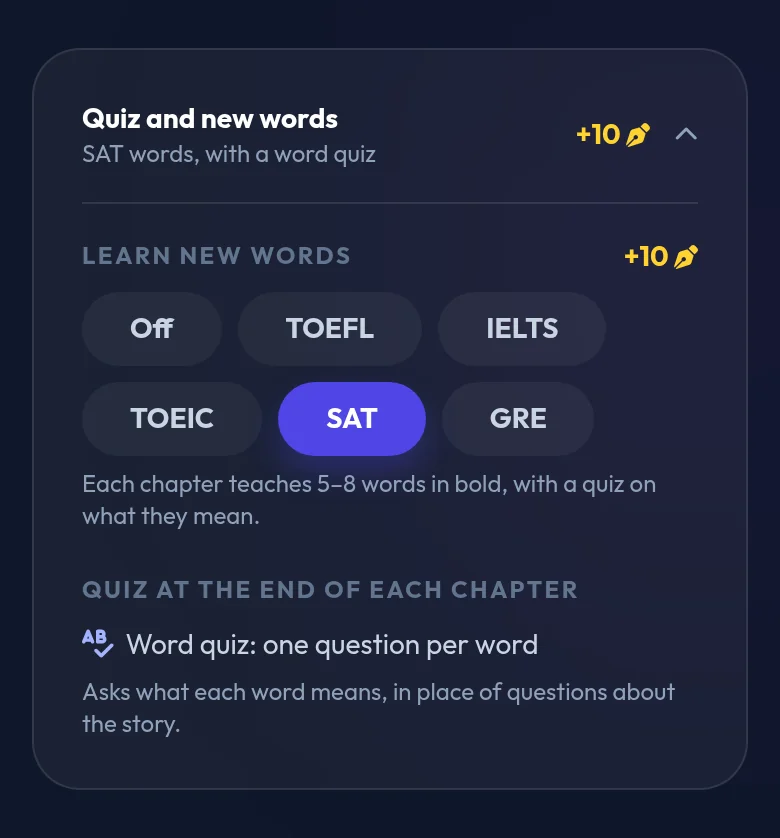
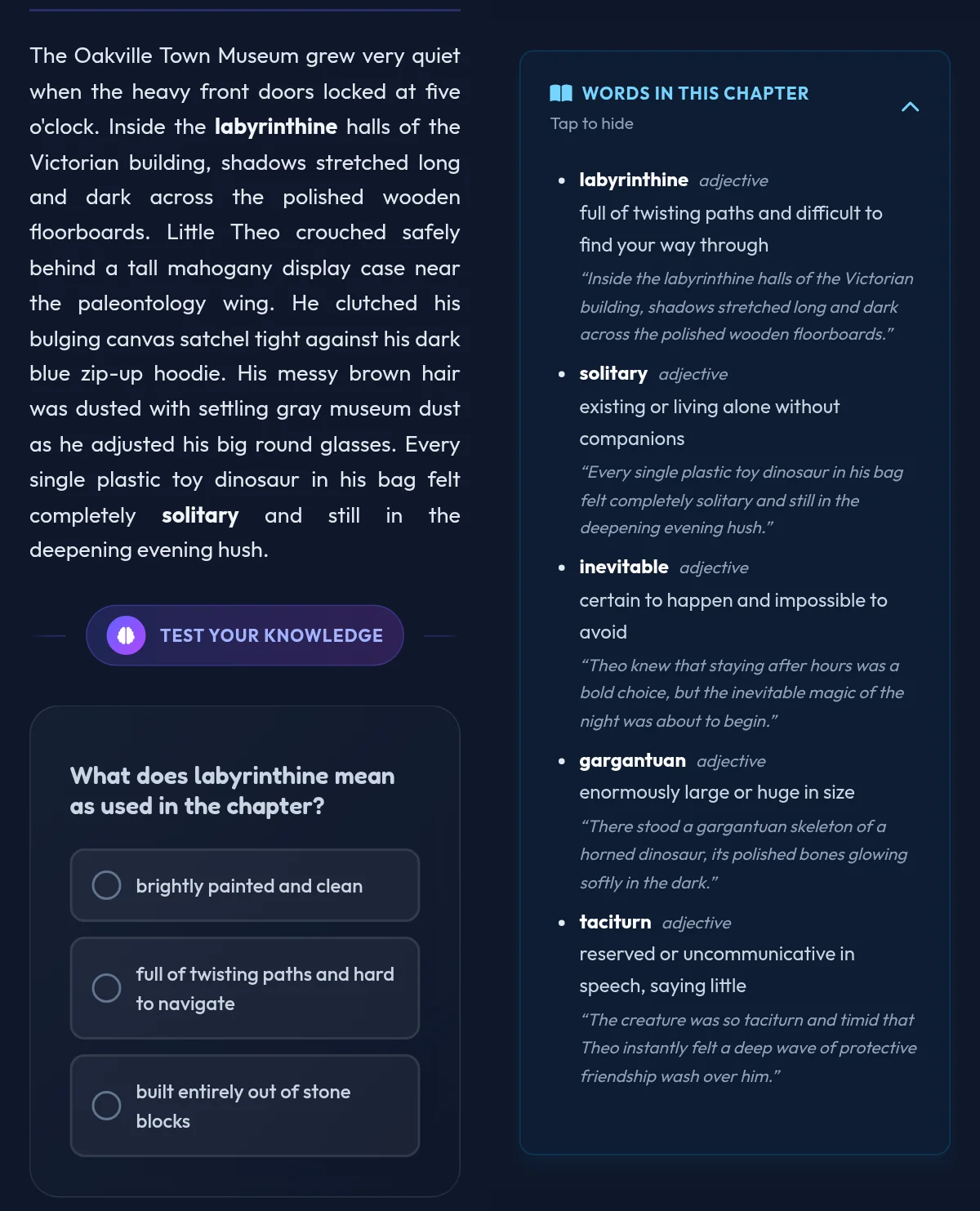
Whether your child is obsessed with dinosaurs, space or magic schools, Papyrly writes a story around their interest and teaches new words in it, each in bold, with context clues that show what it means. Open Quiz and new words when you set up the story and choose a word list, and each chapter teaches five to eight new words. A short quiz at the end of each chapter checks that your child understood them, and a word card lists every new word with its meaning.
Try It Yourself: Create a Custom Vocabulary Story
Building a strong vocabulary doesn't take boring flashcards or repetitive drills. By pairing new words with vivid action, memorable character names and natural repetition, Papyrly makes vocabulary growth an enjoyable part of story time.
Prefer to read together first? Papyrly's bedtime stories are a gentle place to start.
Keep reading

How to Write a Bedtime Story for Kids: Stories that Calm and Connect
Learn how to write gentle, soothing bedtime stories for kids, with classic story patterns, a simple 4-step method and a story you can create tonight.
October 18, 2026 · 4 min read

How to Make Science Interesting for Kids
Turn science into an adventure: how The Big Why series uses kids' own questions, scale shifts and quizzes to make STEM fun, and how to make your own.
October 18, 2026 · 2 min read

What Makes Roald Dahl and Enid Blyton So Successful? (And How to Write Stories Kids Love)
The storytelling secrets of Roald Dahl and Enid Blyton: child heroes, secret magic and clear morality, and how to use them in stories kids love.
October 18, 2026 · 3 min read